

 REQUEST INVITE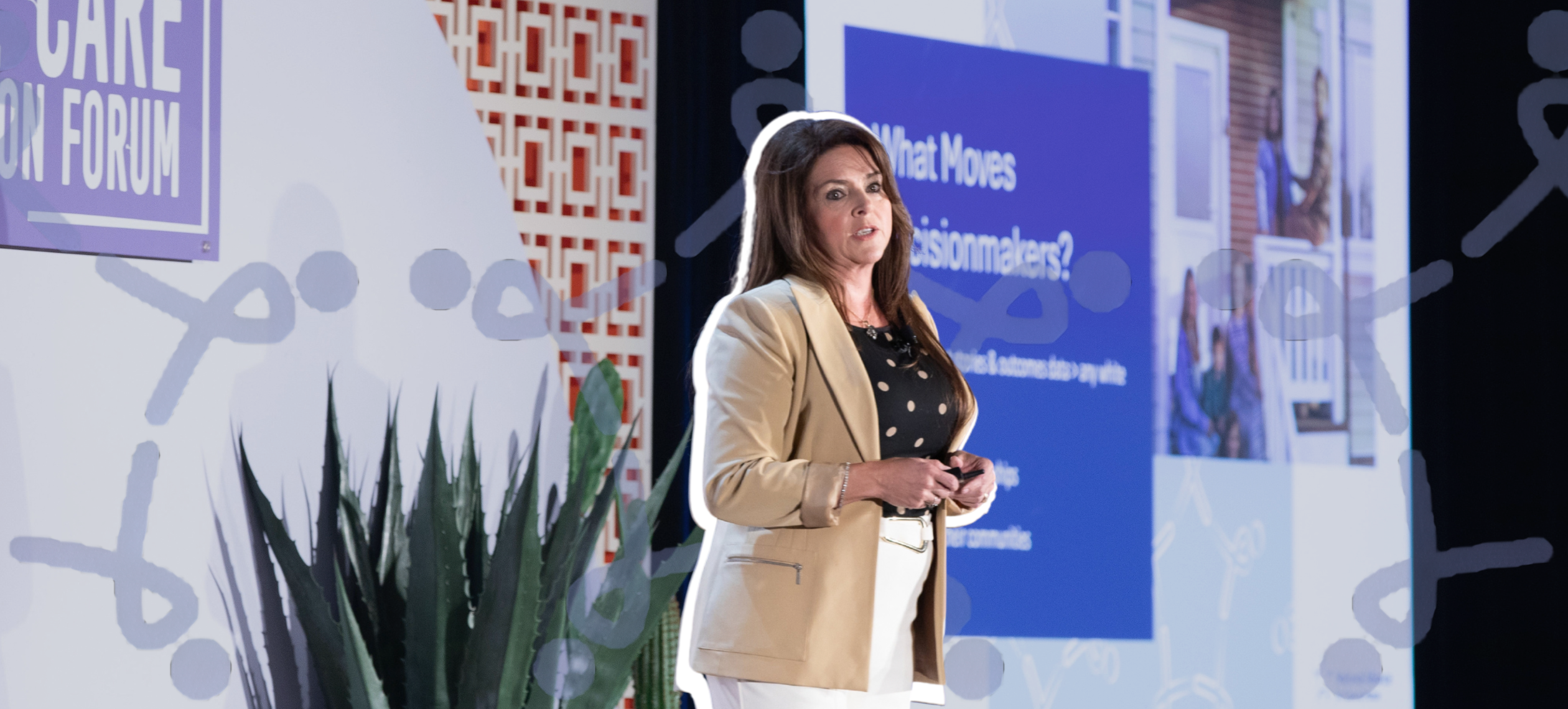
At the Home Care Innovation Forum, Jennifer Sheets opened her talk with a hypothetical picture: an older woman at her kitchen table, managing COPD and early dementia, her daughter six states away. Her care plan is designed around her — not around hospital convenience, DRGs, or reimbursement rates.
Her care team has already talked with her family about how her disease will progress, so when hospice becomes clinically appropriate, she'll choose it, "because they chose to have a conversation when it could still be a conversation," said Sheets, CEO of The Alliance for Care at Home.
That's how it should work, said Sheets. The problem: The current system drives silos and gaps in care, and eventually those gaps widen if not bridged.
What Australia Can Teach Us
Sheets pointed out Australia's home care packages, which since 2013 have assigned each person an annual healthcare fund based on diagnosis, flexible enough that, say, a man can book a nursing home stay for the one week his caregiver daughter travels, then transition back home. In November 2025, Australia evolved it further into the Support at Home program, which funds individual needs rather than diagnosis categories and adjusts each person's fund based on their own engagement — preventive visits, healthy lifestyle, and more.
It’s a model that "should embarrass us a little,” she said.
Here's the thing, Sheets argued: America already has the assets to deliver this kind of care. Home health nurses who know patients far longer than any three-day hospital stay. Hospice teams, the most patient-centered in the ecosystem. Aides who recognize a change in condition "quicker than any algorithm will," she said.
And a resource no other care setting has: the family caregiver, who isn't a supplement to professional care but a core part of it.
Sheets knows firsthand. For 10 years, her mother averaged eight hospital admissions annually. Once care was coordinated at home — even ICU-level care with central lines and infusions — she had three total admissions in her final three years.
"We didn't have to focus on fear. We could focus on life," Sheets said. And that, she emphasized, is not an innovation problem. It's a policy and cultural problem.
Silence Is a Choice
Sheets named the reasons providers sit out of advocacy — capacity, disbelief, fear of being the troublemaker — and admitted, as the former CEO of Interim Healthcare, she'd been that person herself. But with a six-month home health and hospice moratorium looming, reimbursement trailing inflation, and workforce constraints choking access, "none of these reasons are good enough," she said.
When reimbursement doesn't meet the cost of care, access closes — and the person who suffers most is the patient at the kitchen table. Decision-makers, she noted, respond to two things: your operational data and your patients’ stories. "What they don't respond to is silence," Sheets said.
Her three asks were concrete:
- Know your impact — your readmission rate, your referrals-not-admitted, your community's utilization, in 30 seconds flat.
- Take one meeting with your congressman before year's end, armed with data, a story, and one question. The Alliance will help you prepare for that.
- Plug into the resources already available, from regulatory guidance to The Alliance's grassroots arm.
True healing happens in the home, Sheets said, and getting there "is not an innovation problem. That is a political will problem. And political will can be changed. So let's go change it."

Posted by
Join us!
The retreat for home health care and hospice leaders innovators.
May 16-18, 2027 | Pasadena, CA






Comments