

 REQUEST INVITE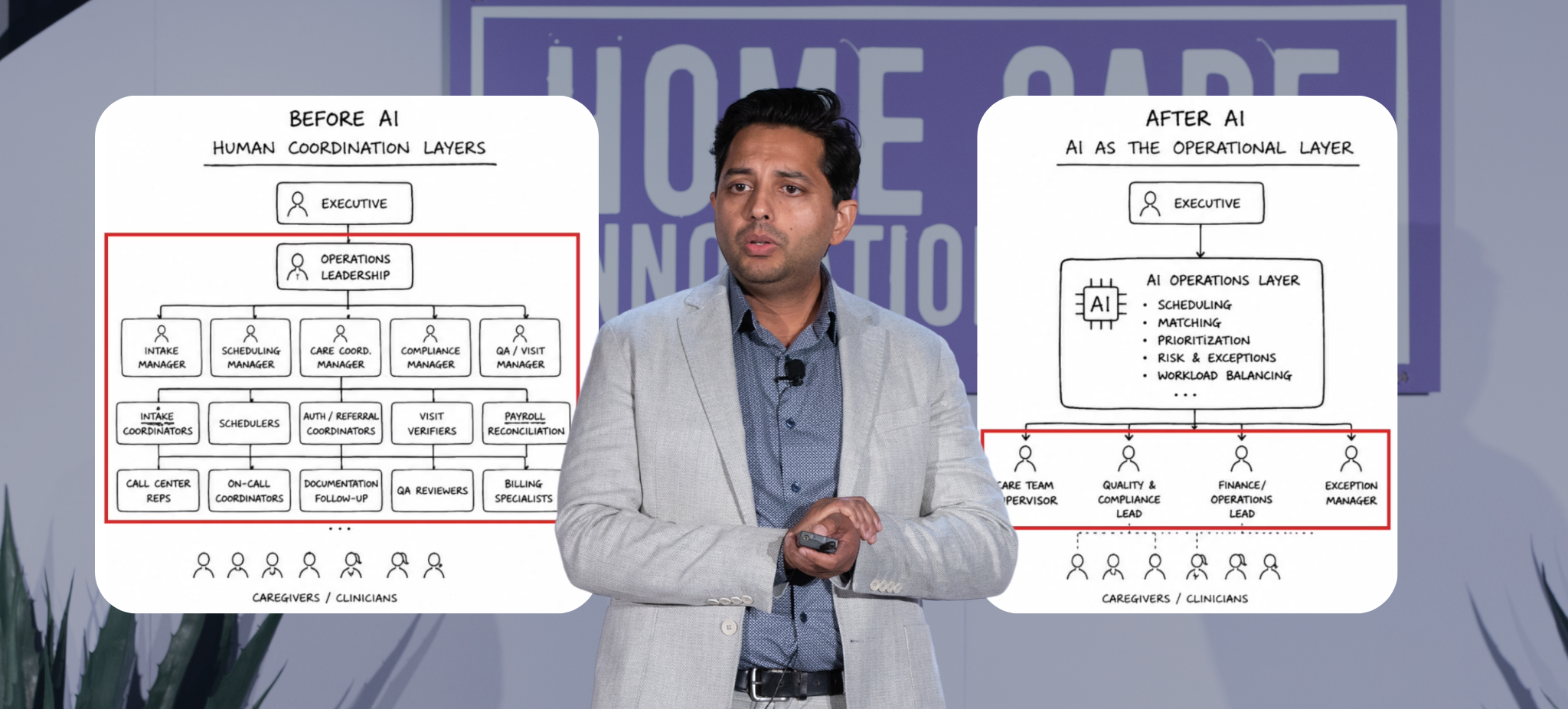
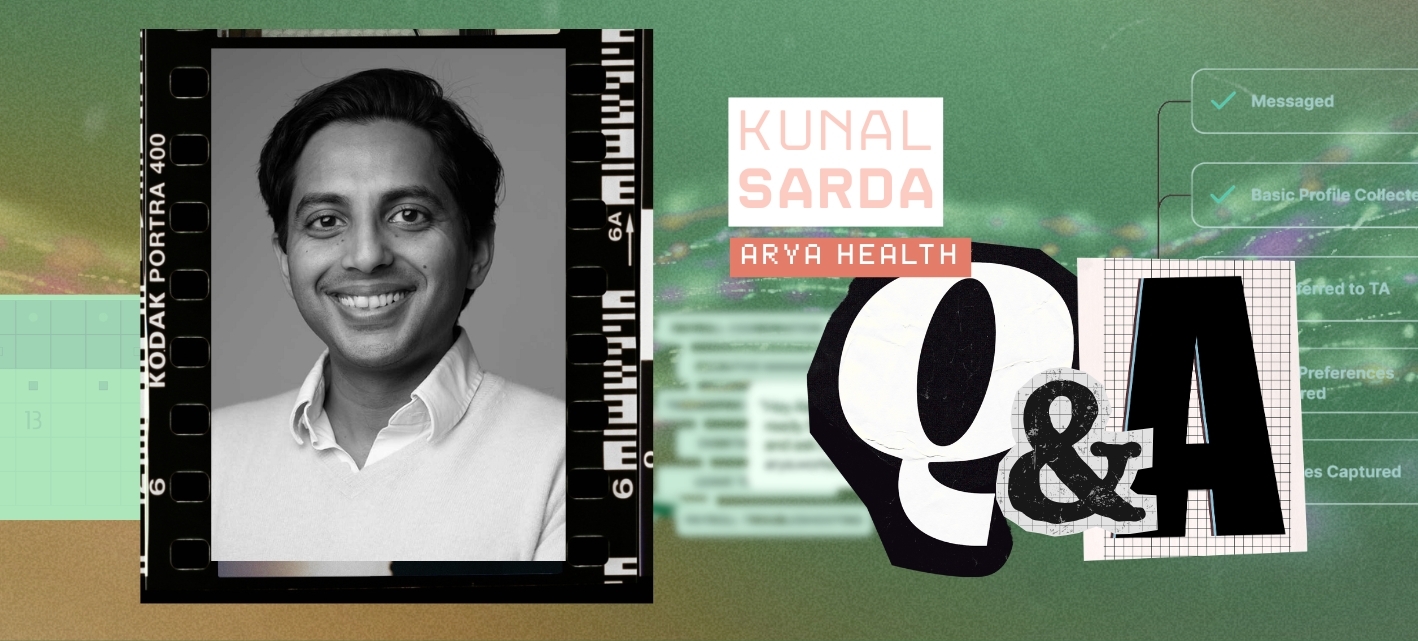
Kunal Sarda, Co-Founder and CEO of Arya Health Health, opened his talk at the Home Care Innovation Forum with a confession: The title of his talk – "Home Care Org Chart Reimagined, Rewritten by AI" — is a little bit clickbait.
AI isn't going to reimagine your org chart for you, he said. His real message was more blunt and more urgent: As a leader, unless you first reimagine your org chart yourself, you won't get any benefit from the AI pilots you're already running.
The Real Competitive Advantage
Sarda's central claim: the defining competitive advantage in at-home care over the next decade will be the ability to grow census faster than administrative headcount.
To make the case, he pointed back 30 years, to a photo of a coordinator on his own team — back when she was in the field, visiting patients directly, making calls herself. Three things have changed the industry since then, he argued: it went from data-scarce to data-obsessed, from a cottage industry to a corporatized one, and from compliance-light to regulation-heavy.
The response, across the board, was to hire — building layers of specialists to manage intake, compliance, scheduling, and after-hours coverage. The result is an industry where nearly every action starts with a human being manually chasing information.
That was OK, Sarda said, until the math stopped working. Reimbursement growth is flattening, wage inflation is outpacing it, and Medicare Advantage penetration keeps pushing rates down. If SG&A keeps scaling linearly with headcount, there's no path to margin recovery, just margin erosion.
Collapsing the Coordination Layer
Sarda's answer isn't incremental efficiency — it's structural. He described a shift already underway among the largest, fastest-scaling operators he works with: Software becomes the coordination layer, and dozens of narrow, function-specific roles distill into a smaller number of owners who oversee the system rather than operate it manually, function by function.
He shared a rough maturity curve from his customer base: around 10 locations, operators report avoiding their next hire; around 20, per-location, SG&A starts dropping; by 30, the advantage becomes structural — a real moat.
The coordinator role itself doesn't disappear, Sarda argued — it transforms. Where routine work is automated, the human job becomes one of managing exceptions: the caregiver about to quit, the 10 p.m. family escalation, the discharge that doesn't fit any protocol. He proposed a new title for this evolved role: the "AI Operations Manager."
Inertia, Anxiety, and ‘What's In It For Me’
Citing Clayton Christensen's Innovator's Dilemma, Sarda named the two forces that stall this kind of change: inertia (the old way still technically works) and anxiety (frontline staff fearing automation will cost them their jobs). He was candid that his team regularly fields angry messages from schedulers who see AI demos as a threat to their livelihood — and called that a fair concern, not one to dismiss.
His recommendation for leaders: make org redesign an input to AI initiatives, not an output you wait to discover after the fact. Be honest with teams early about what's in it for them — retraining, new roles, bonuses tied to successful transitions — rather than letting anxiety fester. And invest in retraining now, not as an afterthought.
Asked whether this shift represents specialization or de-specialization, Sarda offered a reframe: the skill being optimized for isn't a fixed specialty at all — it's adaptability. In a field changing this fast, he said, the most valuable hire isn't the deepest expert in today's workflow. It's the person who can learn the next one fastest.

Posted by
Join us!
The retreat for home health care and hospice leaders innovators.
May 16-18, 2027 | Pasadena, CA



Comments